
Cooking under fire
In the embattled Ukrainian city of Kherson - volunteers cook food for people displaced from the most dangerous red zone. We went to visit one aid kitchen which works under lethal skies.
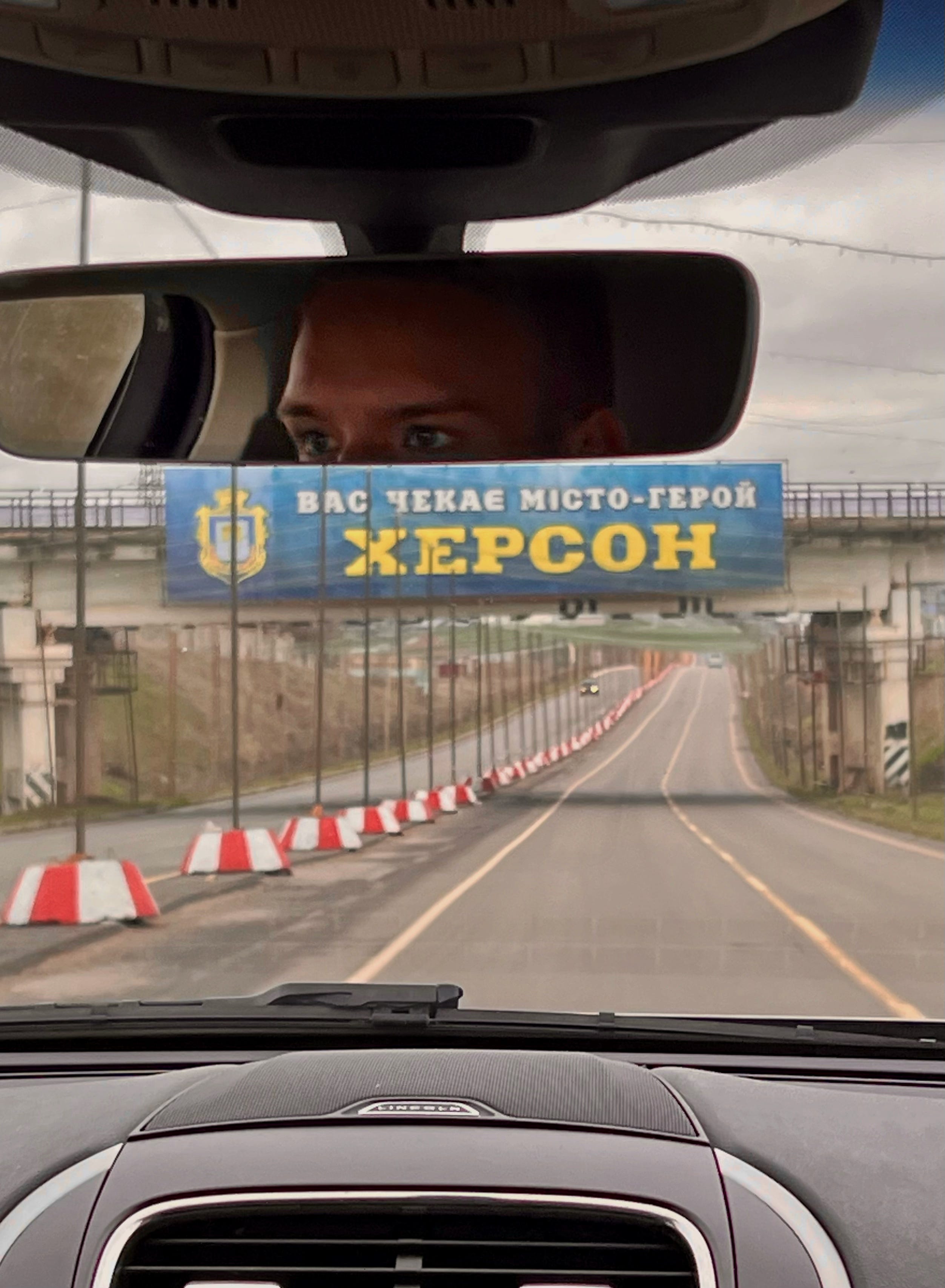
Imagine risking your life just to leave the house, to buy food or get the bus to work, or a hospital appointment. In Kherson, deadly attacks are constant and relentless: the Russian army is positioned just across the river Dnipro and shells the city with artillery every day. But there’s another danger in the skies - small drones known as FPV, or First Person View, armed with grenades or other explosives which Russian soldiers use to target civilians. They blow up cars and buses and people on bikes, they scatter small ‘petal’ mines which blend in with leaves on the side of the road. At one point the main M14 highway into the city from Mykolaiv was attacked so often, the authorities ordered it to be temporarily closed. Buses were trying to evade them by hurtling along at 130km an hour. People who can afford them, drive clutching drone detectors which tune into the signals seen by Russian operators, giving you a few seconds notice to leap clear of the car if it is targeted.
The road is now mostly open again, after the authorities put up miles and miles of fishing nets, stretched out over poles along the roads to form protective tunnels. These are a feature now in most places within 30km or so of the front lines - you can even find them on the outskirts of Kharkiv. They are just ordinary nets, but they will stop drones attached to fibre optic cables which evade jamming. There’s even a traffic light on the side of the road which has nothing to do with oncoming traffic, but turns green if there are no drones detected overhead.
In Kherson itself, nets cover roads in the north and west of the city, although it is too dangerous to put them up in areas closer to the river, most frequently targeted by the russians. They are not 100% effective of course, they can tear and break - or there are ‘loitering’ drones which wait hidden by the side of the road and explode as a vehicle goes past. For the thousands of Kherson residents who remain, it is a horrific way to live.
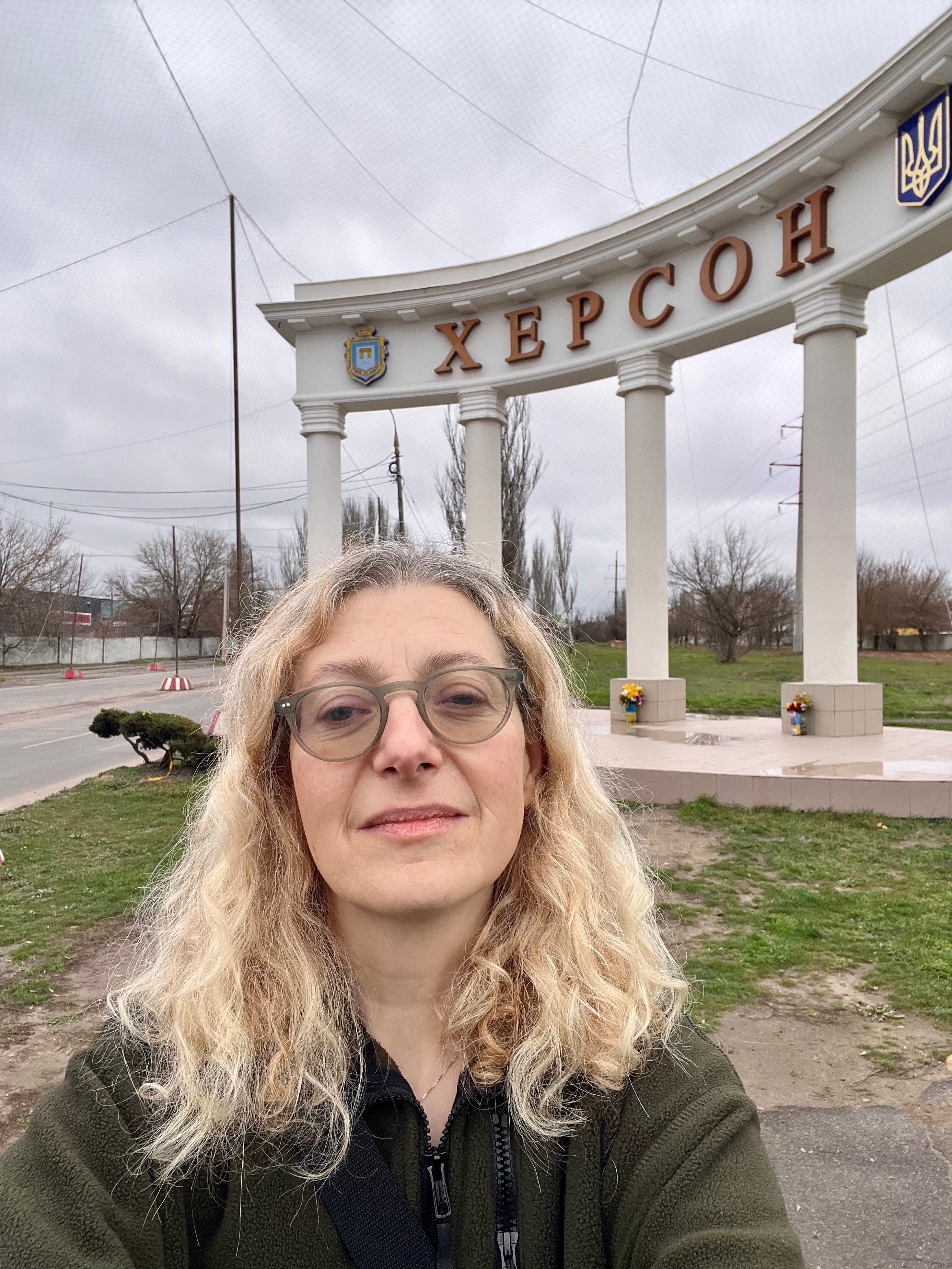
I traveled into Kherson with a chef called Oleg, who I’ve spent time with in eastern Ukraine as he cooks thousands of hot meals a week inside his charity food truck, for people in the greatest need. He’s a compassionate and energetic man, with an enthusiasm for his work which seemingly moves mountains. I ran into him unexpectedly in Mykolaiv, when I popped into a hotel to use the bathroom on the way to our mobile bakery. Oleg was checking out and rushed over as soon as he spotted me. “Do you want to come to Kherson with us? We are going to visit one of the kitchens we support!” So off we went, in a two car convoy with colleagues from another charity which was funding the kitchen, the Ukrainian Federation of Food Banks.
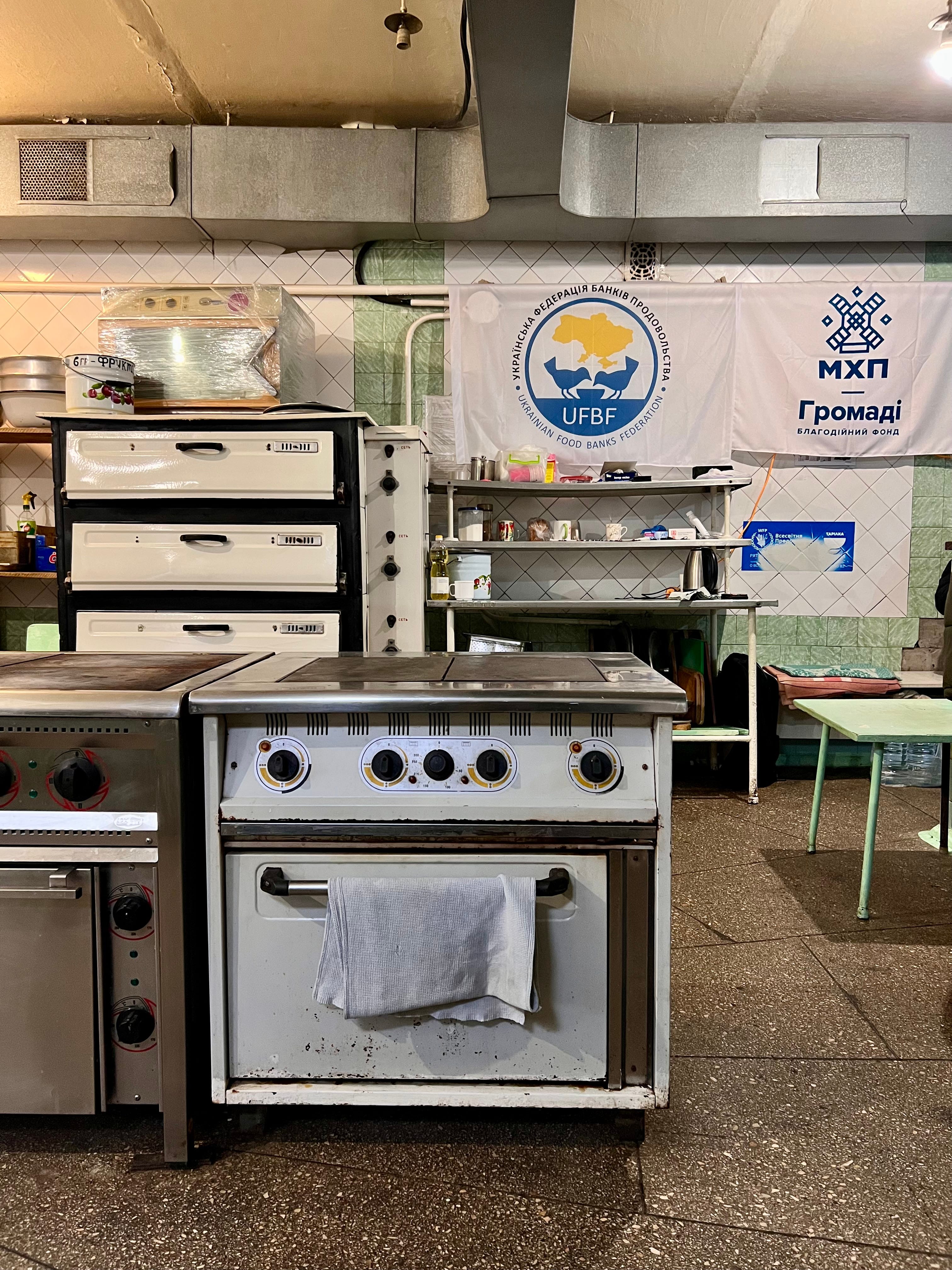
We drove through miles of these net tunnels before turning off to the suburb where the charity prep kitchen was based, and parked in a tucked away spot beneath some trees. There were two cooks, Serhii and Svitlana, busy transferring portions of freshly cooked chicken wings and macaroni into polystyrene boxes. The kitchen was decorated with banners bearing the names of the companies sponsoring their work - including Oleg’s Iskra Dobra fund and the Food Bank guys, and a large foundation called MHP which donates all the frozen chicken. The meals were packed neatly into the back of a van, and off we set across town to deliver them to a humanitarian hub.
From the window of the car, it looked as if barely a single building in Kherson has not been damaged. There were few people out and about, understandably so, given the risks - and many of the bus stops had concrete bomb shelters alongside. Then we rounded a corner to the area where the nets run out. The driver put his foot down, bumping over uneven roads and tram tracks: the view outside turned even more dystopian - there were rows of burnt out buildings, shattered windows, boarded up homes. The van veered around a corner and pulled up sharply in a courtyard where the aid centre was located.
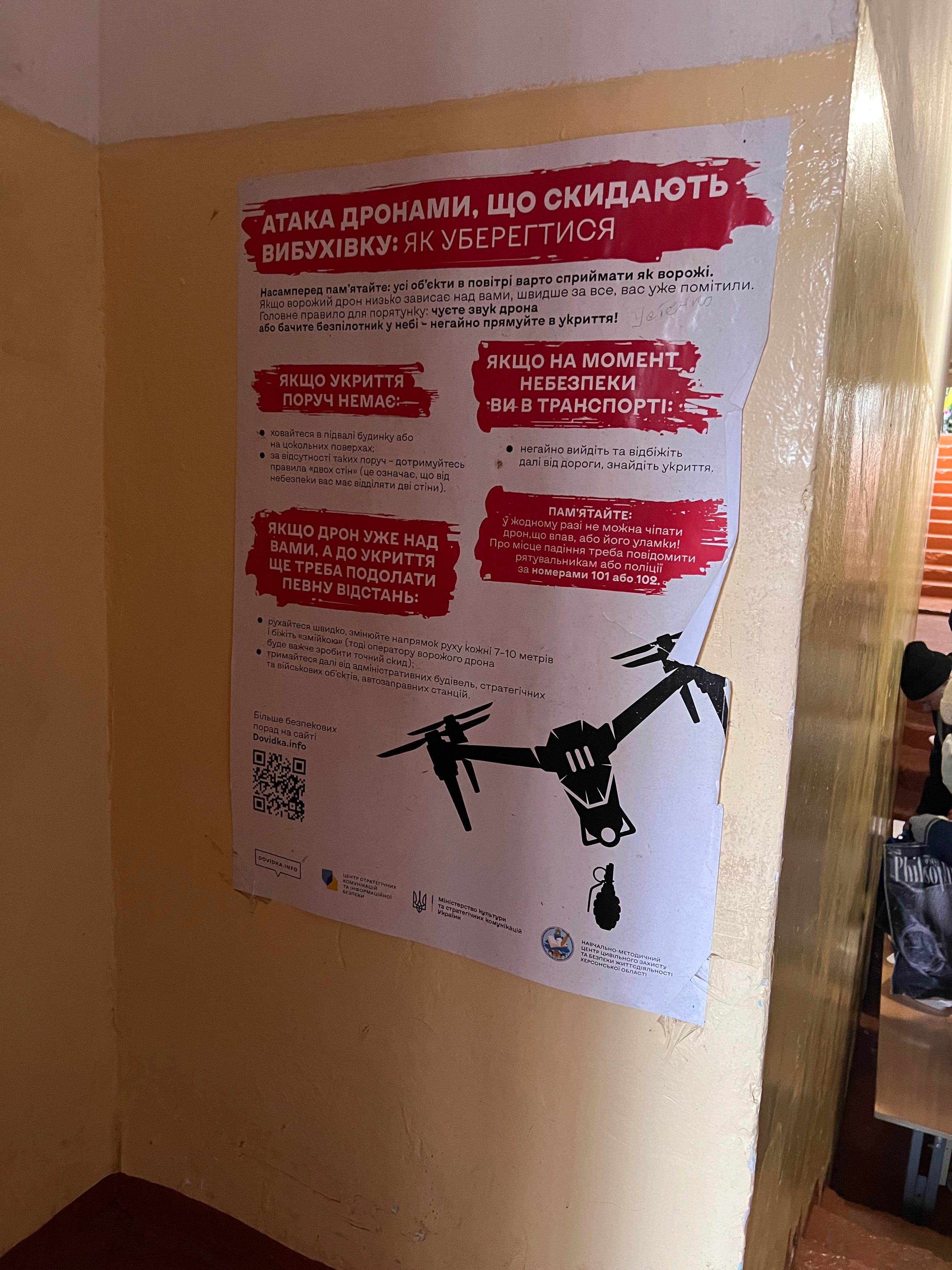
Inside, a former basketball court now housed boxes of humanitarian supplies and bottled water, some with the UN logo, others from the Howard Buffett Foundation. On the wall were posters explaining what to do if you hear a drone overhead - run and hide, seemed to be the advice. The charity guys carried the boxes of hot meals down to a corridor in the basement, where a crowd of mostly elderly people were waiting patiently for the food. Oleg told me they had been evacuated here from the neighbouring Antonivka region, inside the ‘red zone’ where the ferocity of Russian attacks have made it impossible to carry on living.
A lady called Veronika was very definitely in charge, making sure everyone was lining up in the right place, opening up all the crates so that the meal boxes could all be handed over more efficiently. She persuaded Oleg and the Food Bank team to say a few words: they took photos and videos, smiling and shaking hands. There can’t be much to smile about, in such desperate circumstances, but Veronika managed to bring some good humour to the whole operation.
Outside, the guys hung around next to the car for a minute or two, having a cigarette, when there was the unmistakable nasty buzzing sound of a drone in the sky: a shout went up - “drone, drone!” and everyone clattered down the stairs to the basement again. There was the sound of explosions, whether it was someone shooting the drone down, or the thing exploding, I could not tell.
The drive back to the prep kitchen was tense and fast, everyone anxious to get away from the area as soon as possible, while the drones were flying about. If you read the local Kherson channels, there are countless sightings every day in these parts of the city close to the river Dnipro. The Russians are only a handful of miles away. We careered along deserted roads past damaged blocks of flats, until finally the driver swung the car back onto a road covered by net tunnels again, slowing down fractionally as he did so and breathing slightly more normally again.
Before the kitchen, the charity team stopped to talk to a lady who had been the director of a large oncology hospital in Antonivka, before it was destroyed by a Russian attack. She told me it had been a state of the art facility, where cancer patients came from all over southern Ukraine. She took out her phone and scrolled through photographs of the destroyed building, reduced to rubble. “This was my office, our clinic”, she said. “It was all gone in a second. Gone in a second.”
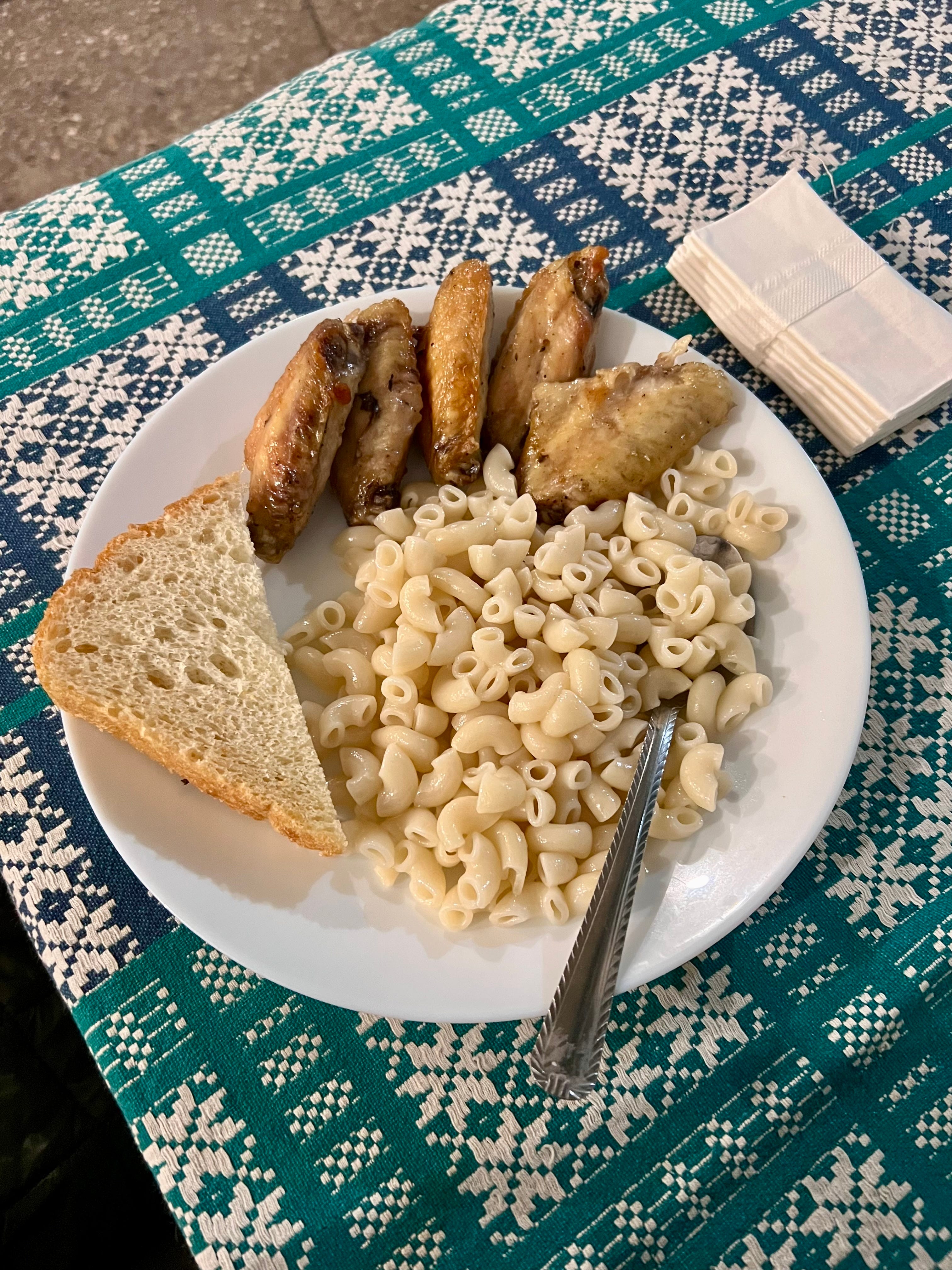
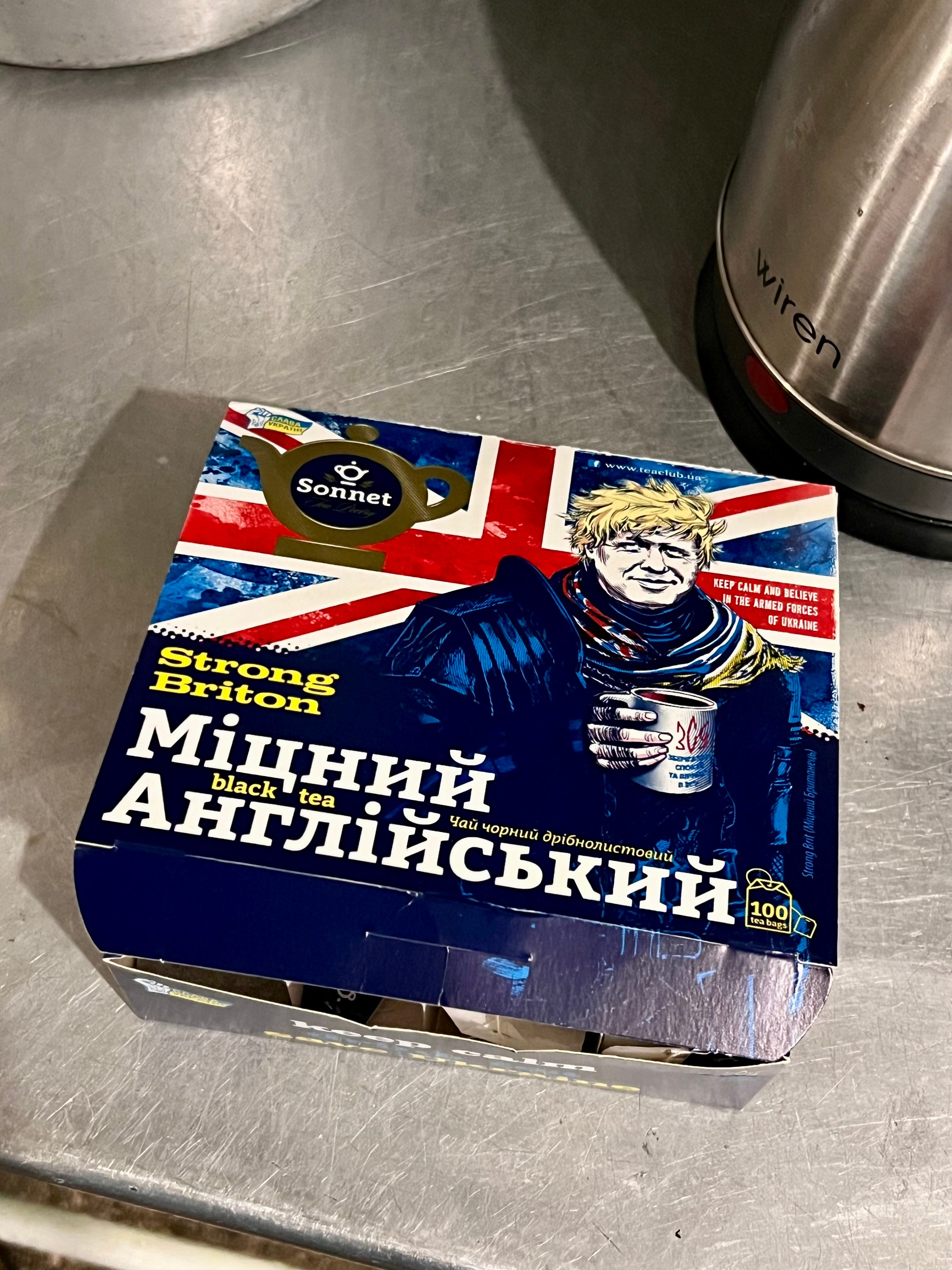
Finally we were able to drop Serhii off at the kitchen, and went inside to get warm. Svitlana dished out plates of the leftover macaroni and chicken, with slices of bread on the side. I asked for a cup of tea to settle my stomach after the somewhat hectic drive, and someone handed me a box of teabags with ‘Strong Briton’ written on it in Ukrainian, complete with a Union Jack and a cartoon figure which I think was meant to be Boris Johnson. It seemed bizarrely appropriate.
On the way back to Mykolaiv, the landscape changed perceptibly: as we drove through the outskirts of the city, there were normal looking shops, people strolling along the pavement, families with children, couples walking their dog. “What a difference 40 kilometers makes”, Oleg said. “It’s another world.”
He told me the kitchen in Kherson needed around 3,000 euros a month to keep going, and worried that it was getting harder and harder to bring donations in: any and all support to the city is truly welcome.
The people of Kherson are subjected to daily terror - but they are determined that their city will continue to live and work, in free Ukraine. Thanks to those who defend the city, the emergency workers who put up the anti drone netting and who put out fires, the volunteers who make and deliver food, and the small businesses which provide jobs, and community, and hope. This is Kherson, and its story shows both the horror of Russia’s war - and the true spirit of Ukraine.
You can make a donation to the Ukrainian Food Banks Federation here. https://www.uafoodbank.org/en
Thanks for reporting from Kherson. It’s insane that the world just accepts what’s going on there now.
This is the kind of (pardon the usage of this phrase here) boots on the ground coverage that we need to see. Thanks Felicity! On a lighter note - Boris looks drunk in that depiction of him on the tea box. Also seems very apt, no?